
FTAsiaEconomy crypto trends point toward a bigger Asian finance story. Crypto is moving beyond simple coin trading. Stablecoins, payments, regulation, and tokenized assets now matter more.
The strongest signal is Asia-Pacific’s rapid adoption. APAC crypto transaction volume reached an estimated $2.36 trillion during the 12 months ending June 2025.
Crypto Trend Snapshot
Instead of a biography-style table, this topic needs a market dashboard.
| Trend | What the Data Shows | Why It Matters |
|---|---|---|
| APAC adoption | 69% annual growth | Asia is a major crypto growth center |
| APAC volume | About $2.36 trillion | Usage has reached significant scale |
| India | Ranked #1 globally | Strong retail and institutional activity |
| Pakistan | Ranked #3 globally | Grassroots adoption remains significant |
| Japan | 120% growth in value received | Regulatory shifts are supporting activity |
| South Korea | Strong professional trading | Crypto behaves like an investment market |
| Stablecoins | Usage expanding across Asia | Payments and liquidity are becoming important |
| Hong Kong | Licensed stablecoin framework active | Regulation is moving toward implementation |
| Tokenization | Growing institutional focus | Blockchain is entering traditional finance |
The figures mainly reflect Chainalysis data through June 2025. Regulatory developments are updated through 2026.
What Does “FTAsiaEconomy Crypto Trends” Mean?
FTAsiaEconomy presents itself around Asia’s economic and financial developments. Its crypto section includes content about cryptocurrency, technology, and digital finance.
However, the phrase should not be treated as an official economic indicator. It is better understood as a search topic or editorial theme.
The useful question is therefore not simply, “What does FTAsiaEconomy predict?” A stronger question is, “What verified Asian crypto trends support that discussion?”
Current evidence highlights four major forces: adoption, stablecoins, regulation, and tokenization.
That distinction matters. Crypto articles often mix forecasts with established facts. This analysis separates measurable developments from future possibilities.
Asia’s Crypto Growth Is More Than Market Hype
Asia-Pacific has become a major center of cryptocurrency activity.
Chainalysis estimated APAC on-chain value received increased 69% year over year. Volume rose from roughly $1.4 trillion to $2.36 trillion during the 12 months ending June 2025.
Monthly activity also tells an interesting story. APAC received about $81 billion during July 2022. That figure peaked around $244 billion in December 2024.
Even after that peak, monthly value remained above $185 billion through mid-2025.
This suggests something deeper than one Bitcoin rally. Crypto activity has developed across very different Asian economies.
Yet users are not adopting crypto for identical reasons.
Some markets favor active trading. Others emphasize remittances or savings. Wealthier financial centers increasingly focus on regulated infrastructure.
That difference is central to understanding Asian crypto.
One Region, Several Completely Different Crypto Markets
Treating “Asia” as one crypto market creates misleading conclusions.
India ranked first in Chainalysis’ 2025 Global Crypto Adoption Index. Pakistan ranked third, while Vietnam placed fourth. Indonesia was seventh.
Japan tells another story.
Chainalysis found Japan’s on-chain value received grew 120% during the 12 months ending June 2025 compared with the previous period. Indonesia grew 103%, South Korea 100%, India 99%, and Vietnam 55%.
Meanwhile, South Korea displays unusually strong professional trading activity.
Nearly half its on-chain activity came from transactions between $10,000 and $1 million, according to Chainalysis’ classification.
So, the Asian crypto map looks more like this:
- India: broad retail and institutional adoption.
- Pakistan: remittances, freelancers, and grassroots demand.
- South Korea: highly active trading culture.
- Japan: accelerating activity alongside regulatory changes.
- Vietnam: payments, savings, gaming, and remittance use.
- Hong Kong: regulated digital-asset infrastructure.
- Singapore: institutional and regulated-market development.
This fragmentation is not necessarily weakness. Instead, Asia acts as several crypto experiments running simultaneously.
Stablecoins Could Be the Most Important Trend
Bitcoin receives more headlines. Stablecoins may reveal more about crypto’s practical direction.
Stablecoins aim to maintain relatively stable values. Most achieve this through links to traditional currencies.
That makes them useful for activities where Bitcoin’s volatility creates problems. Examples include payments, settlement, trading liquidity, and cross-border transfers.
South Korea offers a striking example.
Purchases of stablecoins using Korean won reached about $64 billion during the 12 months ending June 2025. Chainalysis linked demand with liquidity, hedging, and faster movement between assets.
The broader pattern extends beyond Korea.
Chainalysis describes stablecoins as increasingly important for commerce, remittances, savings, and cross-border value transfers.
This creates an important distinction.
Yesterday’s crypto question:
Which coin could rise fastest?
The emerging question:
Which digital asset solves an expensive financial problem?
That shift could reshape Asian crypto coverage.
Hong Kong Shows What Regulated Crypto May Look Like
Hong Kong provides one of Asia’s clearest examples of crypto regulation becoming infrastructure.
Its Stablecoins Ordinance took effect on August 1, 2025. The framework created licensing requirements for fiat-referenced stablecoin issuers.
Hong Kong authorities received 36 applications during the initial period. Two entities received stablecoin issuer licenses in April 2026.
The Securities and Futures Commission later published standards covering relevant stablecoin activities by licensed platforms and corporations.
The market has since moved beyond rulemaking.
In August 2026, Anchorpoint Financial began the first rollout phase of HKD At Par, an HKD-backed stablecoin. Initial access focuses on institutional distributors and professional investors.
That development matters because it connects several trends.
Regulation creates licensing. Licensing enables issuance. Issuance can eventually support payments and settlement.
Crypto regulation is therefore becoming part of product design.

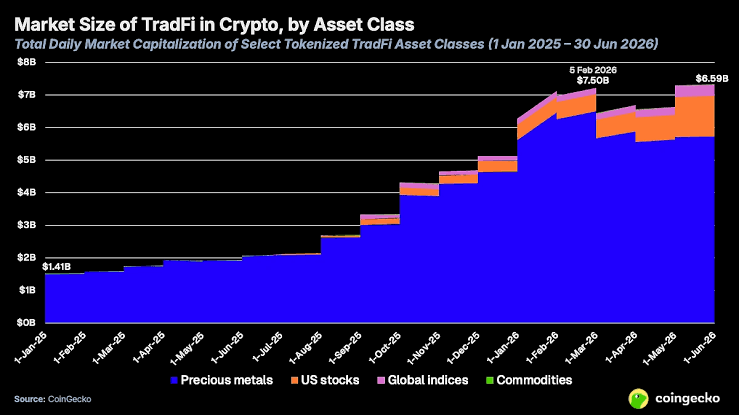
The Quiet Trend: Crypto Is Moving Toward Tokenized Finance
Another important FTAsiaEconomy crypto trend sits outside conventional cryptocurrency trading.
It is tokenization.
Tokenization represents ownership or economic rights through blockchain-based digital tokens. Assets can include funds, bonds, commodities, deposits, or other financial instruments.
This changes the crypto discussion considerably.
Blockchain no longer needs to compete directly against banks. Financial institutions can potentially use blockchain infrastructure themselves.
Tokenized assets can theoretically offer:
- fractional ownership;
- faster settlement;
- programmable transactions;
- broader market access;
- easier digital transfer;
- around-the-clock infrastructure.
However, these benefits are not automatic.
Custody, liquidity, regulation, cybersecurity, and investor protection remain major challenges.
Interest is nevertheless expanding. Financial institutions and regulators are exploring tokenized securities, commodities, deposits, and settlement systems.
The important trend is therefore convergence.
Traditional finance is adopting some crypto infrastructure. Meanwhile, crypto businesses are adopting traditional compliance standards.
Those two systems are moving closer together.
A Better Way to Read Asian Crypto Trends
Price charts alone give an incomplete picture.
A stronger analysis watches five separate signals.
| Signal | What to Watch | What It Can Reveal |
| Adoption | On-chain activity | Whether real usage is expanding |
| Stablecoins | Payment and trading volumes | Practical demand |
| Regulation | Licenses and operating rules | Market maturity |
| Institutions | Banks and professional investors | Mainstream integration |
| Tokenization | Real-world assets moving on-chain | Blockchain’s financial utility |
This framework helps separate durable developments from temporary excitement.
For example, a token gaining 50% does not automatically indicate adoption. The movement could simply reflect speculation.
A new regulated payment system tells another story. It creates infrastructure that businesses may continue using after market excitement disappears.
That is why stablecoin licensing can sometimes matter more than another short-lived altcoin rally.
Pakistan and India Deserve Special Attention
South Asia remains particularly important to the crypto adoption story.
India held the top position in Chainalysis’ 2025 global adoption ranking. It ranked first across retail centralized activity, centralized services, DeFi, and institutional centralized activity.
Pakistan ranked third overall.
Chainalysis highlights several possible drivers within Pakistan. These include a young mobile-first population, substantial remittance flows, stablecoin use, and cryptocurrency payments received by freelancers.
This shows why adoption rankings require context.
High adoption does not automatically mean crypto has replaced banks. Nor does it prove every user holds digital assets.
Instead, it measures different forms of cryptocurrency activity relative to economic conditions.
South Asian adoption appears especially connected with financial utility alongside investment demand.
That makes India and Pakistan important markets to watch.
Three Layers Are Emerging Across Asian Crypto
Current evidence suggests Asian crypto is separating into three layers.
The first layer is speculative. Bitcoin, Ethereum, altcoins, and trading remain important. Price movements still attract retail users.
The second layer is functional. Stablecoins support liquidity, transfers, savings, and payment experiments.
The third layer is institutional. Licensed issuers, tokenized assets, banks, custody providers, and regulated platforms are building financial infrastructure.
This three-layer model explains an apparent contradiction.
Crypto can remain highly speculative while becoming more useful.
Both developments can happen simultaneously.
That is one reason price alone cannot measure the industry’s progress.
Risks Behind the Growth Story
Rapid adoption does not remove crypto’s weaknesses.
Volatility remains significant for non-stablecoin assets. Investors can lose money quickly during sharp market corrections.
Stablecoins carry different risks. Their reliability depends on reserves, redemption mechanisms, governance, custody, and regulation.
Tokenization creates another challenge. Putting an asset on blockchain does not automatically create liquidity or trustworthy ownership.
Regulatory fragmentation also remains important.
Rules differ between Japan, South Korea, Hong Kong, Singapore, India, Pakistan, and other markets. A service permitted in one jurisdiction may face restrictions elsewhere.
Cybersecurity remains another persistent concern.
Users should therefore distinguish adoption growth from investment safety. They are not the same thing.
What Could Define the Next Phase?
The strongest evidence does not support declaring one cryptocurrency Asia’s guaranteed winner.
A more defensible conclusion is structural.
Asia’s crypto market is gradually shifting from a coin-first model toward an infrastructure-first model.
Trading will remain important. Yet stablecoins, regulated exchanges, tokenized assets, custody, and payment networks could determine crypto’s deeper economic role.
Hong Kong’s stablecoin rollout provides a current example. South Korea’s stablecoin activity provides another. India’s broad adoption and Japan’s accelerating market add different pieces.
The next phase may therefore be less about creating thousands of new tokens.
It may be about making digital assets usable inside existing economies.
Final Takeaway
FTAsiaEconomy crypto trends are best understood through verified regional evidence, not predictions.
The data shows that Asia-Pacific has become a major crypto growth region. India, Pakistan, Japan, South Korea, Hong Kong, and other markets are following distinctly different paths.
Stablecoins are becoming especially important. Regulation is becoming more detailed. Institutional infrastructure is developing. Tokenization is connecting blockchain with traditional assets.
The biggest Asian crypto trend may therefore be surprisingly simple:
Crypto is slowly becoming financial infrastructure, not only a speculative asset class.
That transformation remains incomplete. Regulation and adoption also vary sharply by country.
Still, it provides a more useful signal than short-term price predictions.
Sources
- Chainalysis 2025 Global Crypto Adoption Index
- Chainalysis APAC Crypto Adoption Analysis
- Chainalysis Geography of Cryptocurrency Report
- Hong Kong SFC Stablecoin Circular
- Hong Kong Government Stablecoin Update
- FTAsiaEconomy Crypto Section
Editorial note: Cryptocurrency markets change rapidly. Rankings, regulations, and transaction volumes can change. No price prediction or guaranteed investment return has been presented as fact.
Read more:ProgramGeeks Social Explained: What It Is, What’s Verified, and What Isn’t